Saturday, May 12, 2012

Setting Strategic Direction (Part One - Vision)

The following is being posted as Part One of a THREE Part series. It comes from an original article called, "Setting Strategic Direction: Vision, Strategy, and Tactics" by Stever Robbins *. The full article on his website can be seen at http://www.steverrobbins.com/articles/vision-strategy-tactics.htm

PART ONE - An Introduction

Defining and Using The Three Tools of Leadership
You’re so proud of your new vision statement. It sounds nice. Inspiring, even. But the vision is useless unless it can direct action.

Your vision lays out a destination; your destination guides your strategy; and strategy chooses action. It’s action that leads to success. In those moments of action, having clear direction is crucial for building momentum. If your organization is like most, you spent weeks debating every word crafting your vision, mission, strategy, and goals. But no matter how lofty, if they aren’t created in a way that provides direction, those statements are little more than high-priced indulgences.

Every company means something different by the words “vision” and “strategy.” One person insists that “Provide our customers the highest possible quality widgets” is a vision. A friend takes one look and assures him, “That’s a strategy.” Here are some useful definitions that will help you decide if you’ve set a direction that can truly get traction.

Envisioning the future
Vision is timeless. It’s based on who/what you want to do. It’s why you’ve got an organization in the first place. It must be specific enough that everyone can use it to decide if their work is moving the company forward. Progress towards the vision must be measurable. A vision is independent of specific competition, and while it may mention the customer, it must guide even someone who doesn’t know the customers’ mind. The best visions imply whom the company serves, what it provides, and what distinguishes it from other companies providing the same products and services. Vision sets the broad direction. It says, “Go west, young man.”

Wrong: We will provide exceptional products and services that our customers value.

This vision requires knowing the customers’ mind in order to understand what the company provides. It doesn’t distinguish what is unique about the company, since presumably everyone in the market produces something customers value.

Right: We will help boat owners everywhere navigate new seas with geographically based directional products and services.

This vision tells us the market, the product (navigation products and services), the distinguisher (geographically based), and the progress measurement (delight).

Some organizations may call this a mission statement, rather than a vision. Or, they may have both a vision and a mission, with the vision expressing the ideal world or company, and the mission expressing the company’s purpose. For our purposes, they’re the same. A mission statement rounds out the vision. Together, they give timeless, overarching principles chosen by the company that express the company’s reason for being.

WHAT ARE YOUR THOUGHTS on VISION STATEMENTS and MISSION STATEMENTS?  Please add your comments to this post and watch for the final two parts to this series that will be coming soon! 


* Stever Robbins <http://www.SteverRobbins.com>  is an executive coach who helps executives and CEOs grow their business and chart their careers and lives. He is a serial entrepreneur, the author of Get-it-Done Guy's 9 Steps to Work Less and Do More <http://www.WorkLessAndDoMore.com> , host of the #1 iTunes business podcast The Get-it-Done Guy, <http://getitdone.quickanddirtytips.com>  and an adjunct lecturer at Babson College. You can find him at http://www.SteverRobbins.com.
 

Saturday, May 05, 2012

Your Business Tips ...


Every now and again I enjoy hearing from others and learning from some of the great business tips that they are willing to share with others.

If you've come across one of those great suggestions, why not share those 'pearls of wisdom' with others! Simply add a comment to this BLOG post and let's see how many we can assemble. 

If you need a little priming to get started, here are a few tips from my friend, Frances McGuckin from her National Best Selling book, Business for Beginners.

GET PROFESSIONAL ADVICE: Enlist a consultant or accountant’s help in compiling the information into the correct format, and have him or her review it after both the first and final drafts. Putting it all together can be challenging. A bank would prefer to see that you have involved a professional—it helps to validate the contents.

KNOW YOUR GOALS AND OBJECTIVES: By knowing why you are preparing this plan, you can save time and effort by focussing on the important areas. Business plans often contain "filler" information that is not pertinent. Look at sample plans ... to get an idea. If you need to borrow funds, ask the lending institution exactly what is required.

COVER ALL BASES: Lenders look for sound managerial experience in the key areas of sales and marketing, accounting and technical operations. A gap in any one area will count as a strike against the business. Ensure you have covered all these bases in your plan. Competent managers are a strong indication that the business will be in good hands.

Used with permission of the author.
For more information regarding Frances McGuckin visit her Website at: http://www.smallbizpro.com/

Saturday, April 28, 2012

Success Quotes by Vince Lombardi

While researching for an earlier post regarding Vince Lombardi, we came across some great quotes from this legendary American football coach.

What are your thoughts on the connection to these concepts to Business Success?  Please leave us with your comments to any of the following Lombardi quotes:

“A man can be as great as he wants to be. If you believe in yourself and have the courage, the determination, the dedication, the competitive drive and if you are willing to sacrifice the little things in life and pay the price for the things that are worthwhile, it can be done."

“The difference between a successful person and others is not a lack of strength, not a lack of knowledge, but rather in a lack of will."

“The dictionary is the only place that success comes before work. Hard work is the price we must pay for success. I think you can accomplish anything if you're willing to pay the price."

“Leaders aren't born, they are made. And they are made just like anything else, through hard work. And that's the price we'll have to pay to achieve that goal, or any goal."

“I firmly believe that any man's finest hour, the greatest fulfillment of all that he holds dear, is the moment when he has worked his heart out in a good cause and lies exhausted on the field of battle - victorious."

“Football is a great deal like life in that it teaches that work, sacrifice, perseverance, competitive drive, selflessness and respect for authority is the price that each and every one of us must pay to achieve any goal that is worthwhile.”

“To achieve success, whatever the job we have, we must pay a price.”

“Success is like anything worthwhile. It has a price. You have to pay the price to win and you have to pay the price to get to the point where success is possible. Most important, you must pay the price to stay there.”

Sunday, April 15, 2012

What It Takes to be Number One?

I was thinking earlier today of some of the great parallel concepts that exist between business and sport.  Recalling the great success that followed the career of American football coach, Vince Lombardi, I searched the Internet for some of his outstanding quotes. A treasure-trove of materials was quickly uncovered! 

Here are a few key thoughts that really seemed to focus on business. Rather than copy the entire text here, we encourage readers to go to the source noted below to read the full text. 

AFTER reading the words of Vince Lombardi, HOW would you apply them to business and Business Success?  Please add your comments to this post.  Thanks 
 
What It Takes to be Number One

"Winning is not a sometime thing; it's an all the time thing. You don't win once in a while; you don't do things right once in a while; you do them right all of the time. Winning is a habit. Unfortunately, so is losing.


There is no room for second place. There is only one place in my game, and that's first place ... Every time a football player goes to ply his trade he's got to play from the ground up - from the soles of his feet right up to his head. Every inch of him has to play. Some guys play with their heads. That's O.K. You've got to be smart to be number one in any business. But more importantly, you've got to play with your heart, with every fiber of your body. If you're lucky enough to find a guy with a lot of head and a lot of heart, he's never going to come off the field second.


Running a football team is no different than running any other kind of organization - an army, a political party or a business. The principles are the same. The object is to win - to beat the other guy ... I firmly believe that any man's finest hour -- his greatest fulfillment to all he holds dear -- is that moment when he has worked his heart out in a good cause and lies exhausted on the field of battle - victorious." - Coach Vincent T. Lombardi


Click here to view the complete text of this presentation on the official Vince Lombardi website.
 

Wednesday, March 21, 2012

What Does it Take to Be an Entrepreneur?

"Who can be an entrepreneur, you ask? Anyone who wants to experience the deep, dark canyons of uncertainty and ambiguity and who wants to walk the breathtaking highlands of success. But caution—do not plan to walk the latter until you have experienced the former." Anonymous Entrepreneur

In their book, "Never Bet The Farm", authors Anthony Iaquinto and Stephen Spinelli provide many stories of those who walked that path of entrepreneurship.  One example is that of Sam Walton, the founder of Wal-Mart. 

While Wal-Mart is perhaps today the world's largest retail chain, Sam Walton knew what it was to suffer a setback or two.  Here is a small excerpt from this book, which we encourage you to add to your reading list:

Sam Walton "... had turned his very first store—a Ben Franklin franchise in Newport, Mississippi—into one of the most profitable stores in the region. However, when he signed the lease for the building that housed his store, he neglected to include a clause that would have given him the option to renew after the first five years. Seeing what a success Sam had made, when the five years was up, the landlord (who wanted to take over the thriving retail business) kicked him out. Though Sam was tough enough to negotiate compensation for the franchise rights, fixtures, and inventory, it was still a dark moment in his career:
It really was like a nightmare. I had built the best variety store in the whole region and worked hard in the community—done everything right—and now I was being kicked out of town. It didn’t seem fair. I blamed myself for ever getting suckered into such an awful lease and I was furious at the landlord. [Walton, 1992, p. 39]

But Sam Walton soon recovered, and with the money he received from the landlord started his second venture in the little town of Bentonville, Arkansas."

What follows are a few thoughts that were provided by the publisher, John Wiley & Sons.

In Never Bet the Farm two leading entrepreneurs, Anthony Iaquinto and Stephen Spinelli, turn much of the so-called expert advice for entrepreneurs on its head. They show that by preparing for setbacks and using a framework that can help reduce risks and simplify decision making, entrepreneurs can increase their probability for success. They refute the idea that there is an ideal entrepreneurial "type," and show that luck can be as important as a business plan in many enterprises. Above all, the authors emphasize that entrepreneurship is a career, not a one-time event, and winners are those who can keep themselves in the game. Never Bet the Farm is an easy-to-understand and attractive tool for anyone who has a business idea, but who might be wary of the risks implied in starting their own business.

Wednesday, March 14, 2012

Your Comments - Part 9 - "Born or Made"

We promised to provide you with some of the feedback being received on our Linkedin Poll, where we asked the question: Are Entrepreneurs Born, or are they Made?


Our Linkedin Poll was launched on December 18, 2011 and your response has been overwhelming!  Thank you to all who contributed to the debate or voted in our poll.


Below are just a few of the comments that were provided. We have generally not edited what you see below. We trust that it being place on this BLOG will allow opportunity for other to join in the discussion.  Enjoy and please ADD your COMMENTS to this POST!

Bayard Baylis • I agree with those who have indicated that it is a "little bit of both." This question is very similar to the question "Are leaders made or born?" Almost everyone has some entrepreneurial and leaderships spirit and traits that are inborn. However, I do not believe relying on just those spirits and traits will make an individual a good entrepreneur or leader. Look around and we see that not everyone makes a good entrepreneur or leader. To be a good entrepreneur or leader it takes opportunity, timing, training and the willingness to take the plunge and make use of the principles of good entrepreneurship and leadership. One can learn all the techniques and technical aspects of sky diving on the ground. One can get many of the feelings of what it feels like to sky dive in a powerful wind tunnel. However, if one does not go up in a plane, stand at the open door way of the plane and jump, one is not a sky diver. If one does not use the principles that one has been taught, then that individual will not be a successful sky diver. 

Helen Green Msc,BSc(Hons) FRSPH,PGDip • Bit of both. Need to be born with some skills but then have training as they grow  

Louise Angelino • I think it is a little of both. If my parents did start their own business I wonder if I would have. I think that it definitely is something some people are drawn to while others will never take the risk or adventure of being an entrepreneur.  

Richard Moormann • Just like great leaders, drive and inventive spirit is something they are exposed to, encouraged to and overcome a disadvantage at some point. It is not a natural act. 

Maria Jazzy (Domingus) • I selected "born" but believe that it is also a little bit of both. Children born to parents who work in factories, for example, will not necessarily work in a factory. It has to do with individual curiosity, desire to "not be part of the herd" and belief in what you are doing. These traits will make dedicated and successful entrepreneurs.  

Randy Mabry • I believe "successful" entrepreneurs are made but agree there are inherent traits that foster success. Those traits are many, but one of the most important is to not settle for the status quo - regarding yourself. Again, many traits exist, but being hungry for reward (money?) and yet willing to risk lifestyle comfort (money?) to achieve it is a major one. Few businesses are instant successes, so those that can't put off instant gratification will never be one.


Wednesday, March 07, 2012

Your Comments - Part 8 - "Born or Made"

We promised to provide you with some of the feedback being received on our Linkedin Poll, where we asked the question: Are Entrepreneurs Born, or are they Made?


Our Linkedin Poll was launched on December 18, 2011 and your response has been overwhelming!  Thank you to all who contributed to the debate or voted in our poll.


Below are just a few of the comments that were provided. We have generally not edited what you see below. We trust that it being place on this BLOG will allow opportunity for other to join in the discussion.  Enjoy and please ADD your COMMENTS to this POST!

Alan Hunter,AMC,CAM,CCP,CFE,CIPM,ICIA,P. Mgr • I voted for made. David, William, and Elisa have it right. If you look at some of the successful entrepreneurs, they have overcome disadvantage, and have adopted an "I'll be damned if I let that stop me" attitude which has guided them to great success. That having been said, if people are born "with" all it takes to become an entrepreneur, why then, are there not more entrepreneurs than employees in the business world? 

Arun Singh Ruhela (ruhela_arun@yahoo.com) • the mix of both is must. One side of coin will not work. Initial basic traits are must.. and only then one can made something. A tumbler made of ice can store water but for that conditions must be set by outside world..  

Brian Wilson • I believe that Entrepreneurs are born that way since is their choice and theirs alone to choose which side of a Y to follow on the road of life during their journey to becoming an entrepreneur. 

Maureen Livinuk, CMA • I believe there are certain personality traits that lend themselves more to entrepreneurship; traits such as willingness to take risks, leadership skills and achievement oriented. However, environment has a big impact on whether and how an individual will pursue their goals.  

Gurdev Singh Bedi • The entrepreneurship spirit came from within. Self-made entrepreneurs are hungry for success with service while born are hungry for self success with some exceptions. 

Steven Thompson • I feel that we "born with the entrepreneurial gene." Some discover it early and others later. But after you've started something that you think is the "first time," such as a business, a division or even a department, you begin to think back about other things that you've created in your career and life and you can start to see how the dots connect. Hence, the entrepreneurial gene was there all the time.  

Wednesday, February 22, 2012

Your Comments - Part 7 - "Born or Made"

We promised to provide you with some of the feedback being received on our Linkedin Poll, where we asked the question: Are Entrepreneurs Born, or are they Made?

Our Linkedin Poll was launched on December 18, 2011 and your response has been overwhelming!  Thank you to all who contributed to the debate or voted in our poll.
Below are just a few of the comments that were provided. We have generally not edited what you see below. We trust that it being place on this BLOG will allow opportunity for other to join in the discussion.  Enjoy and please ADD your COMMENTS to this POST!

William Warwick • I think Entrepreneurs are made rather than born. Everyone has the dreams and ideas but the entrepreneur is the one with the self belief in their capabilities and he/she knows who to ask for what help is required to bring it to fruition without succumbing to the idea of failure.  

David Cole • The entrepreneurial spirit is something you either have or do not have. This is therefore part of your personality and you are therefore with born an entrepreneur or not. However, to become a successful entrepreneur is something an individual must work hard to achieve and therefore a successful entrepreneur is made. It is down to the individual if they choose to take a risk and follow their entrepreneurial spirit… 

Ehidiamen Ebhomielen • Have to give this one to Nurture as opposed to Nature, personal experiences environment and background all contribute to the entrepreneurship spirit.However it might not be mutually exclusive, the fact that in the people who take the entrepreneurial plunge in respect to the total population is extremely low.  

Shanell Parris • In my opinion, we are all, whether entrepreneurs or not, made. We as human beings are products of our environment. 

Tony Robinson • A Little bit of both - Risk taking/innovation/etc while you may have the assets and mind set at birth they must be cultivated....  

Traci Davis • You are born with certain personality traits that will suit an entrepreneurial path in life. However, it is the experiences in ones life and exposure to circumstances (and being in the right place at the right time) which all have an impact on those that will take take the entrepreneurial plunge. 

Jeffrey W. (Jeff) Jones, A Business Problem Solver • I think people are inspired to want to own a business. That inspiration can sometimes be misinterpreted in the phrase "born for this". Then the person has to learn how to be a good profitable business owner. That learning and training is then construed as "made" 


Wednesday, February 15, 2012

Your Comments - Part 6 - "Born or Made"

We promised to provide you with some of the feedback being received on our Linkedin Poll, where we asked the question: Are Entrepreneurs Born, or are they Made?


Our Linkedin Poll was launched on December 18, 2011 and your response has been overwhelming!  Thank you to all who contributed to the debate or voted in our poll.

Below are just a few of the comments that were provided. We have generally not edited what you see below. We trust that it being place on this BLOG will allow opportunity for other to join in the discussion.  Enjoy and please ADD your COMMENTS to this POST!

Catherine Armstrong  • I don’t know if entrepreneurs are born or made, however I think that it helps to have family or mentors who are entrepreneurs. That sets the idea that employment is not the only alternative. Entrepreneurs need drive, courage, independence, confidence and most of these qualities are developed over time. Successful entrepreneurs also need to build relationships, which takes some humility and a willingness to learn.


Linda Maul, CEC • Great question Jim, and I'm loving the responses to date. I'm also of the belief entrerpreneurs are made and over the holidays I've had the opportunity to read Jim Collin's new book 'Great by Choice'. His research shows successful organizational leaders have a fanatic discipline,empirical creativity,productive paranoia ....all fueled by ambition. The most successful entrepreneurs I know also demonstrate those characteristics. 

Randal Adcock, MA • Its this way. There is a business for everybody, whatever traits you inherit genetically, but you have to figure out what business model to adopt and tailor to meet your natural talents. That is, you have to make that up. You have to know yourself and what role in business is going to align with your natural born strengths. In some cases, you can have someone who looks like the quintessential rogue entrepreneur but hasn't found the right business model, and therefore fails. You can have someone who looks like a regular square bureaucrat but gets into a good franchise and succeeds. Since you can't change your genes, its best to focus on finding and creating a business model that works for you. That, of course, is often easier to say than to do. And you have to want to succeed in business. Is that desire acquired by birth or experience? 


Yvonne Fizer • It helps to have been exposed to role models - parents or respected 'grownups'. But, following on Randall's comments, the sustainable, successful venture is determined by the talent that comes to the table. And NO ONE can do it all. Successful entrepreneurs do what they love and build a team of people who love to do what they hate! 

Rory Tekanoff • I think a lot entrepreneurs encounter lucky breaks, to add to any success they may have. Right place, right time.  


Elisa Miranda • It's the school of hard knocks and support from family, friends, or colleagues that makes an entrepreneur. 

P Le Rudulier • Made, of course, the other option would imply no chance for anybody who would fancy becoming an entrepreneur.  

Saturday, February 11, 2012

What is an Entrepreneur?

A friend of mine Dan Ohler, ACC, Relationship Specialist & Coach asked an interesting question while we were conducting our recent Linkedin Poll on whether, "Entrepreneurs were Born or Made." 

Dan, I thought it would be good to 'throw' that question out to the contacts we have in our social media networks, and see what responses we get to your question!

The question is: What is an entrepreneur? 

Dan added that he read a definition quite some time ago that said: "Anyone can be an entrepreneur who wants to experience the deep, dark canyons of uncertainty and ambiguity; and who wants to walk the breathtaking highlands of success. But I caution, do not plan to walk the latter, until you have experienced the former."

Thanks for the question Dan.  Please feel free to add your comments and also invite those within your circle of contacts to provide us all with your feedback.

30-SECOND MENTOR - Video Clips ...

Got 30 seconds to improve your business success? 

Thirty seconds is not a long time within which to communicate your message.  None-the-less, these Canadian 'champions of change' provide stimulating food for thought as they respond to a variety of business questions and issues in only 30 seconds!


The Financial Post, together with the firm of Ernst & Young provide us access to many interesting insights and perspectives through the "30-Second Mentor" series. Before viewing some of the video clips, take a few moments to think about how you would respond to the types of questions addressed in the series. In fact, why not add your comments to this POST and let our audience know your thoughts on the following questions that we thought were interesting:

How would you respond to some of the questions:
  • How are you prepared for the next downturn?
  • What is the scariest part about being an entrepreneur?
  • Who is the better hire? Under 30 or over 50?
  • If your business plan isn't current, why not?
  • How do you handle rude, aggressive customers?

These "Mentors" offer their insights, which at the very least provide us with the opportunity to consider these questions in more detail, and how we can apply creative solutions to the challenges faced in business today. 

Wednesday, February 08, 2012

Your Comments - Part 5 - "Born or Made"

We promised to provide you with some of the feedback being received on our Linkedin Poll, where we asked the question: Are Entrepreneurs Born, or are they Made?

Our Linkedin Poll was launched on December 18, 2011 and your response has been overwhelming!  Thank you to all who contributed to the debate or voted in our poll.
Below are just a few of the comments that were provided. We have generally not edited what you see below. We trust that it being place on this BLOG will allow opportunity for other to join in the discussion.  Enjoy and please ADD your COMMENTS to this POST!

Ian Hope • We are what we make of ourselves. We have the power to reach as high in life as we want, even though most people aren't concsious of that fact. We're not born to be just this, or just that... I've seen the toughest circumstances which resulted in an alcoholic mother raising 7 alcoholic children- were they born to be alcoholics, or were they to a great extent shaped and perhaps limited by their circumstances and what they learned or didn't learn early on? I've seen families with children born into wealth who became remarkable 'underachievers' and kids from the wrong side of the tracks that now own the railroad... I think for the most part we have the opportunity to make our own fate, and are not born into it.  


John Kuypers • Entrepreneurs have an extraordinary need to achieve. The ones I know often get that way because of childhood circumstances. I think all of them want to prove something to someone. It's an ego-based drive that creates many good things for society but not always good things for family and marriages. As a therapist I respect once said to me, there are only two questions in life: What do you want? and, What price are you prepared to pay to get it? Entrepreneurs are prepared to pay a major price. I say, God bless them! 

Tuulikki Juusela • Women everywhere in the world are interested in entrepreneurship and becoming entrepreneurs. According to the statistics of OECD 35 % of all enterprises in the world are headed by women. Entrepreneurs, both male and female, play a significant role in creating wealth and jobs. Firms with less than twenty employees provide a quarter of jobs. A growing number of these small new companies are led by women. Women`s Enterprise Agency in Finland is giving entrepreneurial training courses. They have been designed to help women entrepreneurs acquire useful business know-how and create networking opportunities. These courses cover all areas of a business plan. You can read more http://nyek.fi/doc/Becoming_an_Entrepreneur_GUIDE.pdf

Arlee C Hoecherl • Jim Good Question. Everyone else excellent Response. In my opinion, this is from doing estate files, and Audits, and business coaching.. Seeing the real life self employed. All the education in the world, with out application.. does not provide success. And then on the other hand what is success ? We tend to use a narrow view of success... Sales growth and Physical accumulation of wealth normally networth statements or dollars. I would submit that there are several OTHER measurements of success. For example going out business Or megers, or sales of business to employees , say closing a businesss, that could be successfull, if the owner prevented further bleeding of capital.. The reason I Said made.. is it reflects a Cognitive process and those who exercise judgement, knowledge, in the process of decision making.. On the other hand Yes there are those who are BORN,, I.e. Kids of Millionaires.. But under further examination, the failure rate is fairly high.. (example the Eaton Family in Retail ) . Often those that are born add to thier birth right, some period of apprenticeship. Look at the Donald Trump family... Do you agree, that the trump children had to Apprentice "CUT thier Teeth" ? Very seldom is it only by birth. Automatic success. "Made" to me is learn by doing. As evidanced by what we are told on the Donald Trump Family, Re family members children Apprenticing under the father.  

Friday, February 03, 2012

Your Comments - Part 4 - "Born or Made"

We promised to provide you with some of the feedback being received on our Linkedin Poll, where we asked the question: Are Entrepreneurs Born, or are they Made?

Our Linkedin Poll was launched on December 18, 2011 and your response has been overwhelming!  Thank you to all who contributed to the debate or voted in our poll.
Below are just a few of the comments that were provided. We have generally not edited what you see below. We trust that it being place on this BLOG will allow opportunity for other to join in the discussion.  Enjoy and please ADD your COMMENTS to this POST!

Karen Carleton (LION) • Usually I hear this question with regards to teachers, managers or other occupations - made or born? It boils down to Nature vs. Nurture, yet of course the two factors are inextricable so it becomes a chicken and egg argument. Things are not that black and white for me. Nature: intrinsic motivation, cognitive/physical/emotional capacity, personality (shaped by experience, and genetics to a lesser degree). Nurture: having guides/mentors, necessary resources, valued colleagues, gaining needed knowledge/skills, and learning by doing with environmental reinforcers (rewards/incentives) for entrepreneurial behavior. Given the right motivation, conditions, resources/supports and reinforcers, an entrepreneur can be made but it's not without a lot of effort. From what I've seen, entrepreneurial spirit tends to be more common among children of entrepreneurs, an idea that supports Bandura's social learning theory. 

Pierre Cormier • I agree with David's comments regarding all the factors that come into play in the making of an entrepreneur. The better entrepreneurs do need help along the way "to learn" on how to be an entrepreneur via growth/learning, pain, failure and success. 

Brian Wrightson • One cannot separate the born and made" elements entirely. Two children from the same family will be different at birth before environment conditions take their toll. One must possess certain intrinsic attributes to succeed in any field be it athletic or academic. I might have all the attributes to by a star cricket player (read entrepreneur) but I have never seen a game so we will never know because my environment never "allowed" this development. Or another question - is a latent entrepreneur still an entrepreneur?  


Stever Robbins • Just to be a bit provocative, might I suggest that the question is irrelevant. If someone is unemployed and can't find a job, they may be forced to start their own business regardless of whether they are an 'innate' or 'made' entrepreneur. Likewise, offered a $1mm/year salary at an established investment bank being a spreadsheet monkey may seduce the most 'innate' entrepreneur into a life of complacency. Furthermore, if we take a non-innate entrepreneur and train them in the basics of business and put them through an experiential boot camp of getting out there and actually starting something, they may well find they love it. So other than giving people an excuse not to go for it ("I'm not an innate entrepreneur and therefore shouldn't bother trying"), I'm not sure the question serves any useful purpose.


Wednesday, February 01, 2012

"Picture the Results" of our Born OR Made Poll

If a picture is worth a thousand words, we'll let the image speak for itself.  Thank you to all who participated in our Linkedin Poll.  We'll be adding some of the comments that were provided over the next few weeks. 

Please feel free to continue the discussion by adding your thoughts to any of the posts that you see in our Business Success BLOG. That's exactly what we plan to do as we review the feedback and remarks that are provided.  Thank you once again for your participation!


Tuesday, January 31, 2012

Your Comments - Part 3 - "Born or Made"

We promised to provide you with some of the feedback being received on our Linkedin Poll, where we asked the question: Are Entrepreneurs Born, or are they Made?

Our Linkedin Poll was launched on December 18, 2011 and your response has been overwhelming!  Thank you to all who contributed to the debate or voted in our poll.
Below are just a few of the comments that were provided. We have generally not edited what you see below. We trust that it being place on this BLOG will allow opportunity for other to join in the discussion.  Enjoy and please ADD your COMMENTS to this POST!

Ed Davies • HI Jim, good question. I believe that entrepreneurs are created by the example of family and friends, business experience and by being blessed with the abilities needed to get the job done. It's not what we have been given however ,its what we do with it that makes the difference. The greatest support an entrepreneur has is a strong sense of self worh based on a solid understanding of who you are. It's like any other relationship if you don't love yourself you can't love others. And in a business relationship if you don't have a good sense of who you are, what's important to you, and that what you have to offer is of value life will be difficult. 

Dawna Allard • Such a great question as we strive to support Alberta's entrepreneurs realize their aspirations. I agree enterpreneurs can be made however, they fall under the 80-20 rule where the minority are the truly successful ones that have a natural born trait. When this trait is mixed with the other necessary ingredients of timing of education, work and life experiences - we get our Great Entrepreneurs. So both born and made applies!  

Stever Robbins • It's interesting how many of the comments here deal with willingness to take risks. The research I was exposed to when working at Babson College (#1 in the world for entrepreneurship for 15 years at both grad & undergrad level) is precisely the opposite: entrepreneurs are NOT more risk-seeking than anyone else. They are often obsessed with minimizing risk, in fact. Entrepreneur-as-risk-taker is a very, very common stereotype that is unsupported by the data. See: http://www.jstor.org/pss/255515 http://www.crainsnewyork.com/article/20100331/SMALLBIZ/100339984# http://davetroy.com/posts/tag/effectuation 

The work of Saras Sarasvathy doing cognitive profiling of successful serial entrepreneurs suggests that (successful) entrepreneurs bound their risk to what they can afford to lose and work within that budget. They don't perceive it as risk because they've made the a priori decision that they are willing to lose the resources on the table. See http://www.effectuation.org for details on her fascinating and extremely applicable research. 

Also see http://actiontrumpseverything.com/ for her work as it's being brought out of the academic community into the mainstream. 


Friday, January 27, 2012

Your Comments - Part 2 - "Born or Made"

We promised to provide you with some of the feedback being received on our Linkedin Poll, where we asked the question: Are Entrepreneurs Born, or are they Made?

Our Linkedin Poll was launched on December 18, 2011 and your response has been overwhelming!  Thank you to all who contributed to the debate or voted in our poll.
Below are just a few of the comments that were provided. We have generally not edited what you see below. We trust that it being place on this BLOG will allow opportunity for other to join in the discussion.  Enjoy and please ADD your COMMENTS to this POST!

Oliver Baezner • I believe that entrepreneurs are made, but it's not completely cut and dry. Having completed dozens of behavioural assessments on entrepreneurs, I have found that often they have strong Director type qualities. It takes these qualities to have the "guts", "determination" and "drive" to break out on their own.

Dan Ohler, ACC, Relationship Specialist & Coach • Great question, Jim. I believe that anyone can be an entrepreneur. However, based upon behavioural style assessments, and a new profiling system I'm learning (called M_DNA), I think there are some people who are born with the hard-wiring that makes entrepreneurship more natural. They have the internal drive, tanacity, passion, and willingness to fail forward. That said, anyone can learn these things, and I believe it comes down to values. When clear on values, people will do almost anything to support those values. 

Neil Kaarsemaker • My vote was based on the premise that while anyone can seek to be entrepreneurial, you need some inherent attributes to thrive at being an entrepreneur. You can teach the skills & disciplines of being an entrepreneur but those who are hot wired for risk and with a strong self-believe and focus for achievement will generally find greater success as entrepreneurs. A voice from the dissenting camp.

Colin Christensen • I was born to be almost anything I want. My skills to be an entrepreneur are native, yes. But, my willingness to deal with risk are the choices I make. A great quote I saw. [Entrepreneurialism] is like jumping out of an airplane with all the materials needed to build a parachute. -- Glenn Bickenstaff

Wednesday, January 25, 2012

Your Comments - Part 1 - "Born, or Made?"


We promised to provide you with some of the feedback being received on our Linkedin Poll, where we asked the question: Are Entrepreneurs Born, or are they Made?

Our Linkedin Poll was launched on December 18, 2011 and your response has been overwhelming!  Thank you to all who contributed to the debate or voted in our poll.
Below are just a few of the comments that were provided. We have generally not edited what you see below. We trust that it being place on this BLOG will allow opportunity for other to join in the discussion.  Enjoy and please ADD your COMMENTS to this POST!

Greg Gazin • If you agree with Toastmasters new tag line, where leaders are made, you would have your answer. Before I joined, leadership, especially talking on the role as District Governor, akin to a CEO, was never on my radar. Toastmasters - the people & the program helped open that door for me. Therefore.... Leaders (Entrepreneurs) are Made! 
Stever Robbins • Once upon a time, EVERYONE was an entrepreneur. The "company man" (or woman) phenomenon is only about 150 years old. Entrepreneurship is a behavior that can be learned by anyone who really wants to learn it. (In fact, I would argue we're naturally entrepreneurs and train it out of people when we send them into the corporate world.)  
Michelle Devlin • I concur with Stever in that we are ALL entrepreneurs in some way - we're born with it. Our whole life we are "selling" ourselves, so in my mind the question is, who keeps that burning desire, takes risks and puts finances on the line to do it? Had the question been: Are SUCCESSFUL entrepreneurs born or made?... I believe they are MADE - through their experiences, mentors and knowledge. 
David Abday • Entrepreneurs in my opinion are made but I believe that there are a number of factors that influence how difficult the "making of an entrepreneur" becomes 1) The personality type and the associated approach to risk, 2) childhood experiences associated with entrepreneurs (success/failures and associated emotions of those affected), 3) mentors, parents and other heroes/villains, 4) motivational factors (rebellion against authority, factors that drive success, seeking approval of specific people) ... etc. Overall making of an entrepreneur is a transforming process usually involving pain, growth, failure and success.

Entrepreneurs ... Born, or Made? (Follow-up Part 3)

HERE is our third segment related to the question: Are Entrepreneurs Born, or are they Made?

BTW - this may be your last opportunity to participate in our Linkedin Poll related to this question, please do so before the poll closes at the end of January 2012.  Take a moment to review the responses and feedback that people have provided!  Cast your vote, and learn from the many who have have already posted. For those unable to access Linkedin, we'll post some of the best comments that we've seen to this BLOG, so be sure to watch for updates!

Here are a few additional findings from "Nurture or Nature: Decoding the Entrepreneur," the report that was released a few months ago by Ernst and Young.  (A survey of 685 entrepreneurs from E&Y's worldwide and in-depth interviews with winners of the Entrepreneur Of the Year award.)

Entrepreneurs share common traits

While our research suggests that entrepreneurs are made, rather than born, the survey did find entrepreneurs will typically exhibit a combination of behaviors and attitudes that are likely to be different from many of their peers in more well established corporate organizations.  When asked what the top three most important qualities of an entrepreneurial leader are, over three quarters of the entrepreneurs identified ‘having a vision’, 73% ‘passion’ and 64% ‘drive’.  The scores for flexibility (33%), relentless focus on quality (18%) and loyalty (14%) were much lower.  


Maria Pinelli, the new Global Vice Chair Strategic Growth Markets for Ernst & Young concludes: “These findings highlight that most successful entrepreneurs share a unique combination of seeing opportunity where others see only risk.  And they tend to be optimists and believe they can succeed despite the fact that everyone else is telling them they cannot.”


Source:  http://www.ey.com/GL/en/Newsroom/News-releases/Entrepreneurs-are-made-not-born


Sunday, January 22, 2012

“From Business Dream to Business Plan”

It's great to 'dream' of having a successful business, but where does the path to business success begin?  Where do those who want to start a business of their own begin?   (Let me come back to that in just a moment ...)

There are in fact many places that people can go to get additional information and training.  One group that I've had the privilege of helping over the years is Edmonton Public Schools Metro Continuing Education

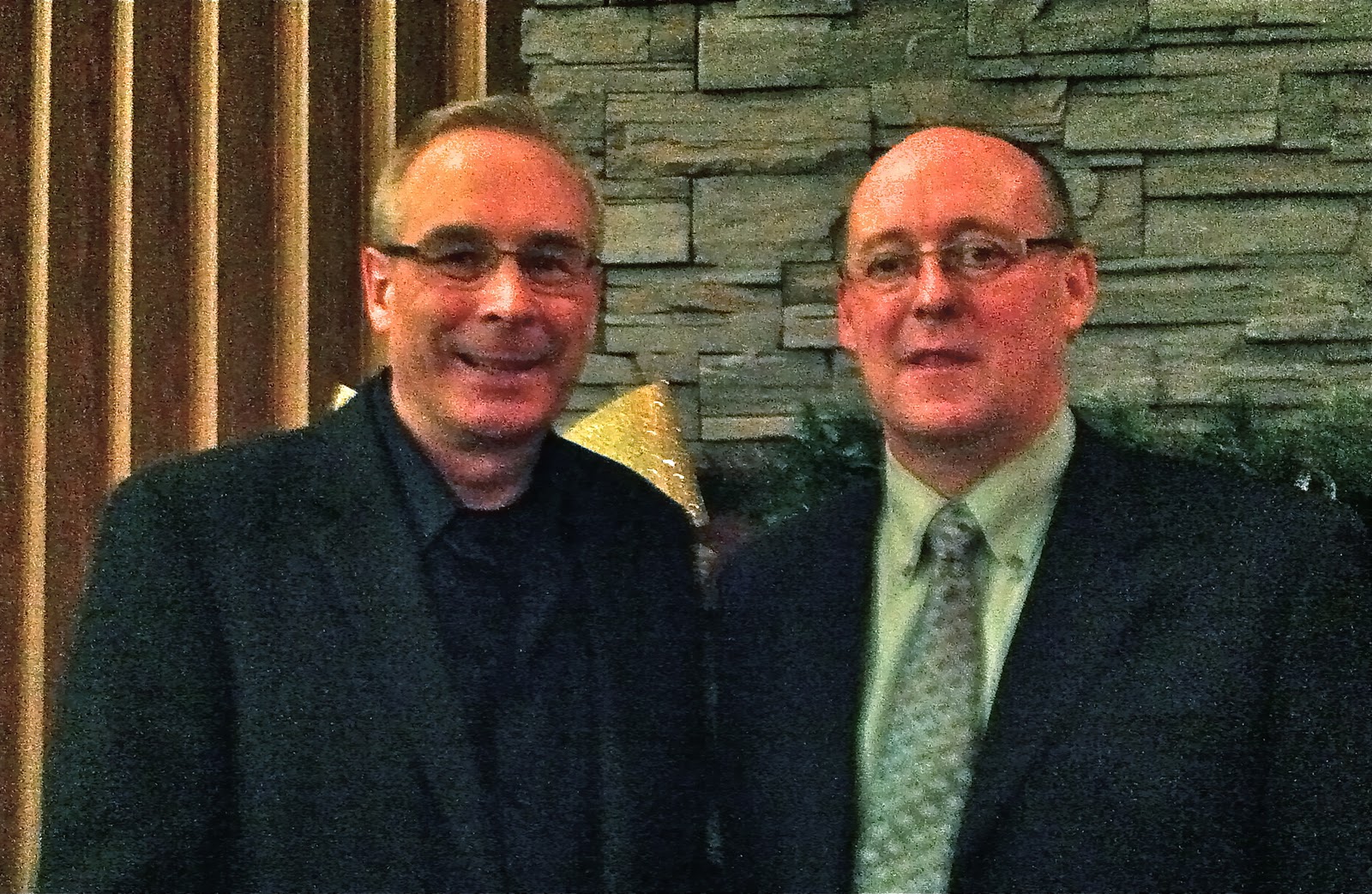
Jim Ewing with Kevin Stevenson
In fact, I recently shared a wonderful evening together with many of their staff and instructors.  It was great to get to know them a little better and build relationships that I believe will be mutually beneficial in the future.  I was fortunate to be able to speak with Kevin Stevenson - Director, Metro Continuing Education.  Kevin and other presenters addressed the outstanding history of the organization and tribute was paid to those who greatly contributed to that history. 

One thing that I learned that evening - I did not know that Edmonton Public Schools Metro Continuing Education was able to trace their beginnings to having provided night school programs for adults in 1891.  Since then, courses have significantly expanded to meet the diverse needs of Edmonton's growing population - something that remains as driving force.

One of the programs that I am pleased to instruct: “From Business Dream to Business Plan” provides attendees with an opportunity to take their
business idea through a process of evaluation in order to help them better determine what they need to do prior to starting a new business.  Participants are introduced to exploring business ideas, start-up considerations, marketing, planning, financing, operation and managing a business. Experienced guest speakers address some of the challenges that can be expected along the way.

 * If you are in the greater Edmonton area and would be interested in participating in the 4 session series, they are being held on Wednesday evenings from 6:30 pm - 9:00 pm.

Start date is February 8, 2012, and the last class is on February 29, 2012.

More information about this program is listed on the Metro Continuing Education website (course number: 43000033  -01 in the Adult Continuing Education: Business & Management section.)

Click here to open the website where programs are listed in alphabetic order.


Wednesday, January 18, 2012

Entrepreneurs ... Born, or Made? (Follow-up Part 2)

HERE is another segment related to the question: Are Entrepreneurs Born, or are they Made?

BTW - if you have not yet participated in our Linkedin Poll related to this question, please do so before the poll closes at the end of January 2012.  Take a moment to review the responses and feedback that people have provided!  Cast your vote, and learn from the many who have have already posted. For those unable to access Linkedin, we'll post some of the best comments that we've seen to this BLOG, so be sure to watch for updates!

Here are a few additional findings from "Nurture or Nature: Decoding the Entrepreneur," the report that was released a few months ago by Ernst and Young.  (A survey of 685 entrepreneurs from E&Y's worldwide and in-depth interviews with winners of the Entrepreneur Of the Year award.)


Entrepreneurship is rarely a one-off decision
For the majority of entrepreneurs launching only one business venture is clearly not enough.  Sixty per cent had started three or more companies, 20% six or more and 10% said they had founded more than ten companies in their career to date.  That doesn’t mean that having created these companies they automatically cut all ties with their previous interests.  Among the survey respondents, 45% say that they have retained some ownership in each of their previous ventures, and 28% say that they have retained a stake in some of them.

Funding, people and know-how are the biggest barriers to entrepreneurial success
Among the 6 out of 10 respondents who experienced obstacles in their ventures, the most common barrier to future growth cited (33%) is the lack of funding or finance.  This reflects the current environment, where many entrepreneurs said they continued to experience problems with accessing finance, despite a gradual easing of credit conditions in many countries.  The two other most-cited obstacles are recruiting the right people with appropriate expertise.